

In last week’s essay, we looked at a report from Infinite Potential, Beyond Blue and the Ultimo Institute which found that more than one in three workers surveyed met the criteria for burnout. The report found strong links between burnout and the conditions in which people work, including workload, friction, fragmentation and insecurity.
The essay ended on a question the report could not answer. Beyond the demands organisations place on us, what demands do we place on ourselves, and why do capable, committed people sometimes keep pushing past their limits when nobody is asking them to?
One of the most capable people I know recently burnt out. He was always the most organised and deliberate person in the room, and a consistently high performer. We worked alongside each other for a time and I admired his tenacity, judgement and abilities. He was switched on and burnout was never going to happen to him. Then it did. No one saw the warning signs, and when the collapse came, it came quickly.
Nothing about his story suggests failure. He is one of the most capable people I know and he still is. And that is the point: if burnout can reach him, it can reach any of us.
Why the organisation is only part of the story
Dr John Chan, the author of the report, told the ABC: “We’re trying to move this conversation away from the individual.” For years the standard answer to burnout was to tell people to be more resilient, and the report gives good reason to push the other way. Burnout that varies between widely different workplaces is not simply a personal failing.
Chan is not saying individuals have no part. He has also said that leaders and organisations are responsible for creating the right environment, and that people need to speak up when something is not right. But there is another question worth asking alongside the responsibility of organisations. Among workers who described themselves as somewhat satisfied with their jobs, 25 per cent still met the definition of burnout. Even among those who were extremely satisfied, eight per cent did. People can enjoy their work, feel committed to it, and still be burnt out.
Those figures do not tell us whether working conditions were good or bad. Job satisfaction and a healthy working environment are not the same thing. But they raise a question worth exploring. Alongside the demands that organisations place on us, what happens when we have absorbed the expectation that we should always be capable of more? The pressure may be experienced as our own, even when the values behind it came from somewhere else.
One account of that second source comes from the philosopher Byung-Chul Han, in his book The Burnout Society. His argument is a philosophical interpretation, not a research finding. The idea lands with some readers and not with others. The test is whether it matches what you recognise in your own working life.
From should to can
His argument is about a change in how societies get people to do things.
The older arrangement, which Han calls a disciplinary society, worked through prohibition. Rules, authority, obedience. Its operative word was should, or must. There were things you were not permitted to do, and someone external to you decided what they were. In Han’s account, which borrows from the philosopher Michel Foucault, that world was one of hospitals, prisons, barracks and factories. The pattern is older than those institutions. The demand came from some form of authority, whether monarchy, aristocracy or church.
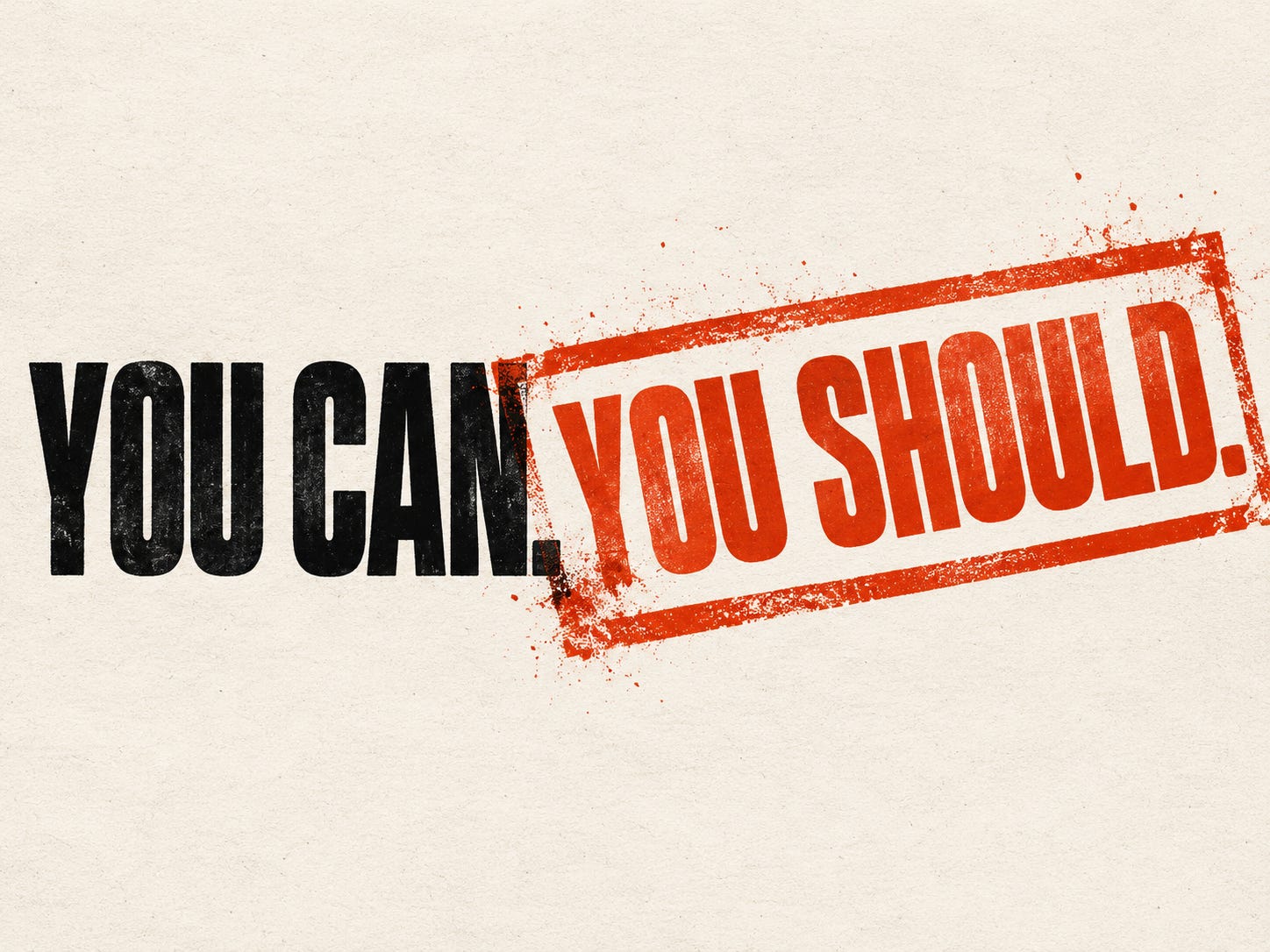
Han argues that this arrangement has largely been replaced. In his account, twenty-first-century society is no longer a disciplinary society but an achievement society, and its operative word is ‘can’. The plural form, ‘Yes, we can’, sums it up. Our own history runs in a similar direction. Over the past few hundred years, liberal revolutions loosened the grip of monarchy, aristocracy and church, and the prohibition of ‘you cannot’ gave way to the liberal anthem of ‘you can’. Modern society runs on ‘can’. You can get fitter. You can start the business. You can be more present with your children, learn the language, buy the property, write the book. Almost nothing is forbidden, and a great deal is available. We experience the change as freedom, and in most respects it is.
But freedom has a catch: we can become enslaved by our own freedom. A possibility that is genuinely open starts to behave like an instruction. You can becomes I could, and I could becomes I should, and nobody has said a word. The old authority that stood outside us has moved inside, and we drive ourselves harder than any old authority would have. Han describes the people living under these conditions as achievement-subjects: no longer obeying anyone, but performing constantly, and measuring themselves against what is theoretically available rather than against what anyone has asked of them.
When you are the one giving the orders
His term for what follows is self-exploitation. We become the person giving the orders and the person carrying them out. Han argues that this arrangement is more effective than external pressure ever was, for a specific reason: the demand feels like freedom while it is happening. An external authority can be resisted, resented or negotiated with. A demand you issue yourself has no one on the other end of it to argue against.
Han treats burnout as the characteristic cost of living this way. Not a failure of individual resilience, not an inability to cope with normal life, but the predictable result of a system in which the pressure is self-administered and unlimited.
Why the willing carry the most
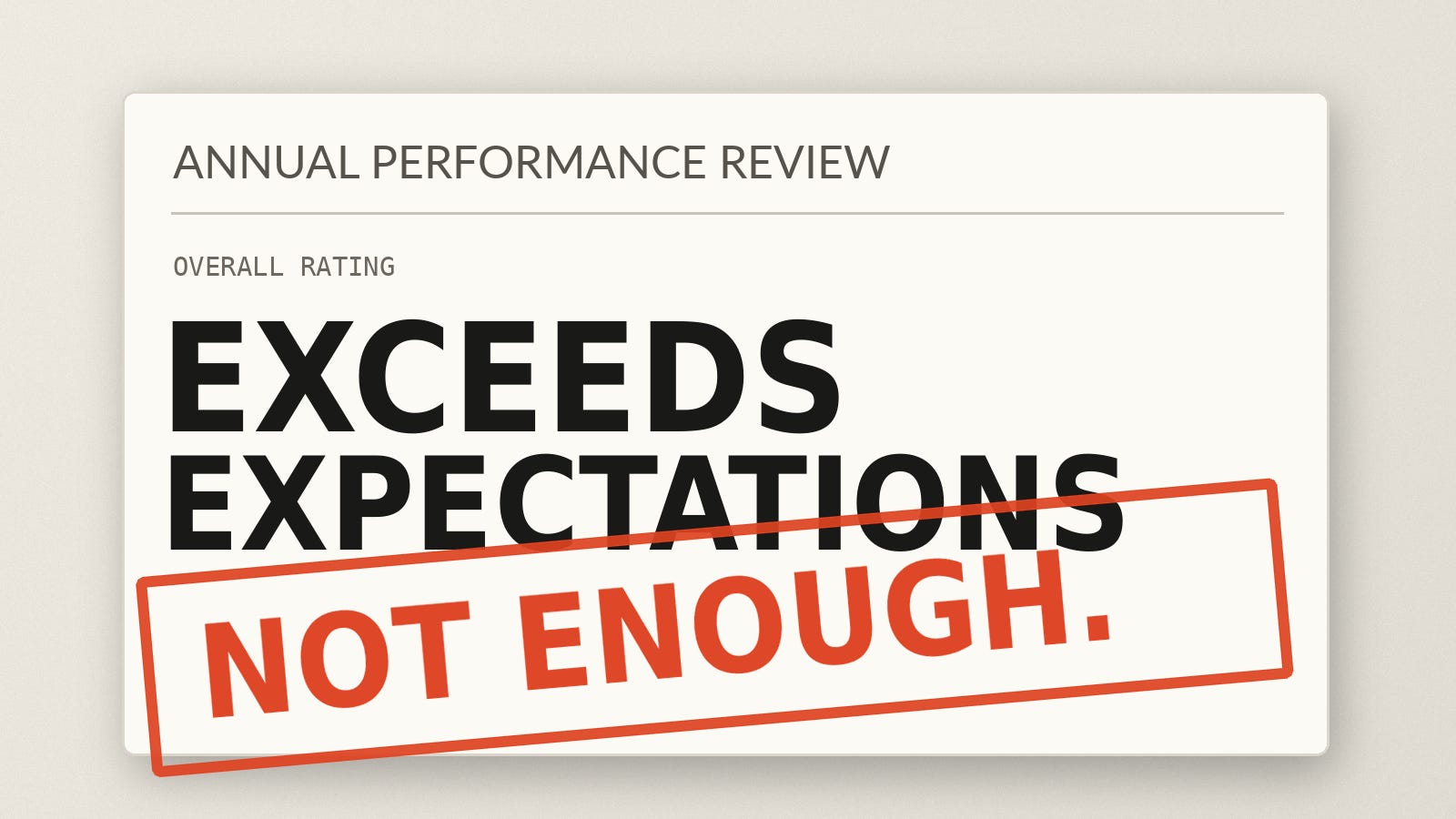
Self-issued pressure is hard to notice because it looks like a virtue. In most workplaces, working hard is how people show commitment. The people who work hard get ahead, and the people who get ahead are praised for the habits that are wearing them down.
The more a person achieves, the more work tends to arrive. The reason is not cruelty. Work goes to the people who will do it, and the most capable and willing people are the ones who rarely say no. There is an old saying about flogging a willing horse: the one that keeps pulling is the one that is asked to pull more. Applied to work, the people who never refuse end up carrying the most.
Here the two sources meet. A leader hands work to the person who will do it. The person takes it, because taking it is how commitment is shown, and the next piece of work goes to the same person. Neither side needs to intend harm. The load grows because the person accepts it, and the person accepts it because the leader keeps offering.
Nobody is positioned to say stop. The manager sees the output. The person sees a standard they set themselves and a record of meeting it. Professor Brough lists changes in sleep, anxiety about returning to work after the weekend, and abandoning usual hobbies among the red flags for burnout. From the outside, a person working longer and dropping everything else can look committed. From the inside, the same person can look disciplined.

Where is the pressure coming from?
The report and Han approach the problem from different directions. One examines the conditions surrounding the work; the other asks how society teaches us to make demands of ourselves. In practice, the two can reinforce each other.
Imagine the conditions around your work improved tomorrow. The workload became manageable, the systems worked and your manager stopped asking for more. Would you allow yourself to slow down? Or would you keep finding more to do, more to prove and another standard to meet?
The answer cannot tell you what caused your exhaustion. Organisational demands and internal expectations often reinforce each other. But it might reveal a source of pressure you have stopped noticing, precisely because it feels like your own choice.
And if that pressure is still there, it is worth asking where it came from, what it is costing you, and whether you still want to live by it.
If every condition around your work changed tomorrow, what would still be driving you?